Showing posts with label hydroelectric power. Show all posts

Getting Started With Renewable Energy

Getting started with renewable energy article in Home Power Magazine gives a straightforward advice about professional load analysis and site survey when starting with renewable energy.

The first step in renewable energy system planning is to determine how much energy is needed to be made:
  • If the site is off grid, the stand-alone systems must provide all the site’s required electricity with renewable energy sources or a backup engine generator. This is when energy efficiency and conservation becomes critical. For this reason, most renewable energy consultants will ask for a detailed load profile. These systems also need to be accounted for seasonal energy availability. For example, more energy will be used in the summer because the house is for vacation use or pumps a lot of water for irrigation. In a year-round home, the critical energy time may be winter, when more lights and other loads are used.
  • On grid sites doesn't require accommodating the complete load. Systems can cover as little as 10% to 50%, or even over 100% of home’s electrical use. Utility detects the imbalance and supplies only what is demanded from the user. Any extra energy produced will go to the grids, which will buildup KWH credits that can be used when system’s output is lower.
When determining energy requirements, most dealers will roughly calculate what size of system is needed and give a ballpark cost figure. Then the installing dealer or RE consultant will visit the site and assess what RE resources are available on the property. When planning the system, everyone who will be using it should know how it was planned, how it works, and what he or she can do to make it run well.

For solar energy, site surveyor will evaluate the property with a solar site selector tool. It helps determine which locations the property or roof are shade free. This will show the best location for PV array or solar water collectors. PV arrays can be put hundreds of feet away from home, but solar hot water systems need to be much closer because long pipes become costly and incurs high heat losses.

If the property has a potential wind energy site, wind turbine might be a great asset. However, wind turbine requires regular maintenance and poorly cared components can become hazards. Surveyor will determine if adequate room exists for a tilt-up tower, or freestanding tower is necessary. Freestanding towers have smallest footprint, and may be the only appropriate tower for a small lot.

Micro hydroelectric systems can be one of the most cost effective but sometime hard to implement because local, state, and federal authorities can have jurisdiction over the activity, unless water resource is completely privately owned. Hydroelectric works well with solar or wind energy sources since water still flows when there is no sun or wind.

Hybrid systems are best for off grid system because one source can backup another source and vice versa. However, hybrid capability is less important on grid-tied systems which use utility grid for backup. Battery-less grid-tied systems are often the most cost-effective, environmentally friendly, and easy to operate systems available.


Have you got the flare for Solar Power?

Following up my look into hydroelectric power on a personal scale, I’ve decided that next on my list for a detailed examination is Solar Power. It seems an obvious point that most people will want to know about this kind of technology to supplement their electricity, (that means electric power, electric radiators, etc...) so I will attempt to tackle the more pervasive issues in this field, such as how can you effectively produce this kind of energy on a small scale? Is it of any use in a place as devoid of sunshine as the UK is?! What are the uses of solar powering? These questions and more will be tackled in this blog post.

Ok, so sticking with the previous posts format, let’s start with the basics. Solar power is by far the Earth's most available energy source, easily capable of providing many times the total current energy demand.

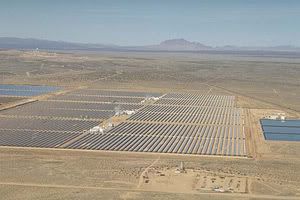
At its most basic, solar power is the conversion of sunlight into electricity. This can be achieved in two primary ways. These are directly using photovoltaic’s (PV), or indirectly using concentrated solar power (CSP). PV converts light into electric current using the photoelectric effect, whilst CSP uses lenses or mirrors and tracking systems to focus a large area of sunlight into a small beam. (I’ll explain both in more detail later).


These systems (especially CSP) can be built on massive scales. The 97 MW Sarnia Photovoltaic Power Plant in Canada is the world’s largest photovoltaic plant. Commercial concentrated solar power plants were first developed in the 1980s, and the 354 MW SEGS CSP installation is the largest solar power plant in the world and is located in the Mojave Desert of California. Spain also boasts some impressive plants, the Solnova Solar Power Station (150 MW) and the Andasol solar power station (100 MW) in particular.


Photovoltaic 

PV is a device which generates electricity directly from visible light by means of the photovoltaic effect. In order to generate useful power, it is necessary to connect a number of cells together to form a solar panel, also known as a photovoltaic module. The nominal output voltage of a solar panel is usually 12 Volts, and they may be used singly or wired together into an array. The number and size required is determined by the available light and the amount of energy required.
 
Concentrated solar power

CSP systems use lenses or mirrors and tracking systems to focus a large area of sunlight into a small beam. The concentrated heat is then used as a heat source. A wide range of concentrating technologies exists; the most developed are the parabolic trough, the concentrating linear Fresnel reflector, the Stirling dish and the solar power tower. Various techniques are used to track the Sun and focus light. In all of these systems a working fluid is heated by the concentrated sunlight, and is then used for power generation or energy storage. The diagram here shows how one type, a trough, works. The pipes and arrows represent the working fluid. This is heated when the sun’s rays are reflected from trough, thus giving a higher thermal energy for the fluid leaving. 

Personal use
So there are the principles of solar power. But how can this work on a personal level for the home owner? Well, most small, personal use systems will involve the use of PV’s. The diagram on the left shows the basic principles of solar power for the home.
 
Types

This highlights the fact that you can not only use the available electricity for your own home, but you can sell back any excess to the national grid. This is maintained in a Grid-connected system. In this system, the solar array is connected to the mains. Any surplus power is sold to the electricity company, and power is bought back from them when it is needed.

In a Stand-alone system, however, this is not possible, as this means you are not connected to a grid. Therefore storage of energy is needed. In this type of system the usual choice for energy storage is the lead-acid battery. Bear in mind, the number/type of batteries is dependent on the amount of energy storage needed.

Should you go Solar?

One of the first things to consider is, of course, the source of energy itself. Just as with hydro-power, this type of power generation is site-dependant; no sun=no power. So some levels of sunlight are necessary. 

So, to decide if you can go solar, and what system to use, calculating Insolation is necessary. To be able to make calculations in planning a system, the total amount of solar radiation energy is expressed in hours of full sunlight per m². One hour of full sun provides 1 kWh/m² (the solar energy received in one hour on a cloudless summer day on a one-square meter surface directed towards the sun). Insolation, or sunlight intensity, is measured in equivalent full sun hours. One hour of maximum, or 100%, sunshine received by a solar panel equals one equivalent full sun hour. The easiest way to measure your solar power needs however, (for those of us who don’t speak “maths”) is via an online calculator, such as at Renewable Resource Data Centre. You enter the number of kilowatts your theoretical system produces and it will tell you how much solar radiation is available throughout the year where you live and how much electricity that turns into.

Next to consider is the initial start up cost. Whilst these are relatively lower these days, (some can be bought for less than £500/$812 now) it is still a relatively costly procedure. However, these initial investments will pay off in the long run, normally within 6 years. 

Whilst finances are paramount for some people, others consider the environment. It was said that the amount of emissions saved from using solar was less than the emissions produced by making the solar panel. More recent studies however have shown that the emissions produced by manufacturing a solar panel are balanced out in three years of use. And as solar panels now have warranties of 20 to 25 years, and last even longer, the environmental benefit is massive. If you are interested in solar because of the environmental benefits, even generating a portion of your power with the sun will improve the environment.

So, with both financial and environmental gains to be had, is it time you switched to solar?


Article submitted by Carlo Ruggiero.
Carlo Ruggiero is a green aficionado who is passionate about getting the word out on renewable sources of energy and all things green, from funding your hot water to making money from your electric heating.  You can follow his struggle with social media and daily musings on Twitter.

Hydroelectric power, a new wave in personal renewable energy

Following responses on a previous post on basic and general principles for renewable energy sources at home, this writer will now attempt to go into some of the fundamental principles, advantages and problems facing the average person in their attempt to become as energy self-sufficient as possible. 

In this post we tackle one of the most problematic, yet highly efficient means of reaping the rewards of renewable energy on a personal level; using the kinetic energy of water to power your electricity. This is probably most applicable to the average person in the generating of electricity to power your electric radiators

First of all; the basics. As this rather dramatic picture of the hydroelectric plant in Columbia shows, hydroelectric power refers to electricity generated by hydro-power; that is the production of electrical power through the use of the gravitational force of falling or flowing water. This type of power is one of the most widely used on large scales due to its many advantages over other types of energy generation. It accounts for approximately 20% of the world's electricity and about 88% of electricity from renewable sources. This method of garnering energy at hydroelectric complex’s has taken off massively in recent years, hitting unprecedented levels of usages; the Three Gorges Dam in China at 22,500 MW being the largest to date. Hydroelectricity has eventually supplied some countries, including Norway, Democratic Republic of the Congo, Paraguay and Brazil, with over 85% of their electricity (nearly 90% in Norway). Even the US has gotten in on the act, with currently over 2,000 hydroelectric power plants which supply around 49% of its renewable electricity. 

Principles

So, how does it work? BASICALLY, in a hydropower system, dams on a river capture its power and direct the fast-flowing water through turbines and turning generators to produce electricity. The difference between the water levels above and below the turbine and the rate of water flow determine the amount of power generated.


Pico-hydro

However, this of little use to the average homeowner who doesn’t have a convenient river/dam, or the funding to build one. On a personal level, it is the use of Pico-hydro that becomes applicable. Pico-hydro is a term used for hydroelectric power generation of under 5 KW. As the average house wattage is less than 2 KW, this is ideal. 

Pico-hydro setups typically are run-of-the-river; meaning that dams are not used, but rather pipes divert some of the flow, drop this down a gradient, and through the turbine before returning it to the stream.

The main parts of this system are intake from stream or river, pipe (known as the penstock), water turbine, electrical generator, electronic controller, electrical distribution system, but they can come in a variety of shapes and sizes, as seen here. 


Advantages
  • Gives you uninterrupted and reliable electrical power
  • User controlled power generation
  • Can provide electricity to all typical domestic appliances (think electric heating), so is versatile. Power packs up to 1 kW can be used of non-motive loads such as lighting, TV, Computer, water heating etc. Larger power packs can be used for motive loads such as refrigerators etc...
  • No recurring fuel costs. All this is required is the running of the water down a slope.
  • Has next-to no maintenance costs as the rotating parts are fully balanced and are not exposed to high temperatures unlike internal combustion engine based power packs.
Problems
  • Starting costs. You need the funds to buy the equipment!
  • An obvious drawback to his type of renewable energy sourcing is the necessity of moving water on or near your property. So is very site specific
  • Run-of-the-river style hydro-power is affected by flow and ebb of water, meaning it can be unreliable in certain places or during certain times of the year
  • Certain head, flow and output characteristics are required.
  • Regardless of output, there are certain fixed costs.
Comparisons
Hydroelectricity eliminates the flue gas emissions from fossil fuel combustion, including pollutants such as sulphur dioxide, nitric oxide, carbon monoxide, dust, and mercury in the coal. Hydroelectricity also avoids the hazards of coal mining and the indirect health effects of coal emissions.
Compared to wind farms, hydroelectricity power plants have a more predictable load factor. If the project has a storage reservoir, it can generate power when needed. Hydroelectric systems can be regulated to follow variations in power demand.
Overall, hydroelectric power seems like an attractive prospect for the homeowner. So if you have a site that could run this system and the funds to start it, why not give it a go?


Article submitted by Carlo Ruggiero.

Carlo Ruggiero is a green aficionado who is passionate about getting the word out on renewable sources of energy and all things green, from funding your hot water to making money from your electric heating.  You can follow his struggle with social media and daily musings on Twitter.

Related Posts Plugin for WordPress, Blogger...