Following up my look into hydroelectric power on a personal scale, I’ve decided that next on my list for a detailed examination is Solar Power. It seems an obvious point that most people will want to know about this kind of technology to supplement their electricity, (that means electric power, electric radiators, etc...) so I will attempt to tackle the more pervasive issues in this field, such as how can you effectively produce this kind of energy on a small scale? Is it of any use in a place as devoid of sunshine as the UK is?! What are the uses of solar powering? These questions and more will be tackled in this blog post.
Ok, so sticking with the previous posts format, let’s start with the basics. Solar power is by far the Earth's most available energy source, easily capable of providing many times the total current energy demand.
At its most basic, solar power is the conversion of sunlight into electricity. This can be achieved in two primary ways. These are directly using photovoltaic’s (PV), or indirectly using concentrated solar power (CSP). PV converts light into electric current using the photoelectric effect, whilst CSP uses lenses or mirrors and tracking systems to focus a large area of sunlight into a small beam. (I’ll explain both in more detail later).
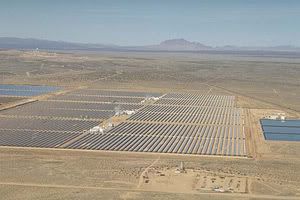
 These systems (especially CSP) can be built on massive scales. The 97 MW Sarnia Photovoltaic Power Plant in Canada is the world’s largest photovoltaic plant. Commercial concentrated solar power plants were first developed in the 1980s, and the 354 MW SEGS CSP installation is the largest solar power plant in the world and is located in the Mojave Desert of California. Spain also boasts some impressive plants, the Solnova Solar Power Station (150 MW) and the Andasol solar power station (100 MW) in particular.
Photovoltaic
PV is a device which generates electricity directly from visible light by means of the photovoltaic effect. In order to generate useful power, it is necessary to connect a number of cells together to form a solar panel, also known as a photovoltaic module. The nominal output voltage of a solar panel is usually 12 Volts, and they may be used singly or wired together into an array. The number and size required is determined by the available light and the amount of energy required.
Concentrated solar power
CSP systems use lenses or mirrors and tracking systems to focus a large area of sunlight into a small beam. The concentrated heat is then used as a heat source. A wide range of concentrating technologies exists; the most developed are the parabolic trough, the concentrating linear Fresnel reflector, the Stirling dish and the solar power tower. Various techniques are used to track the Sun and focus light. In all of these systems a working fluid is heated by the concentrated sunlight, and is then used for power generation or energy storage. The diagram here shows how one type, a trough, works. The pipes and arrows represent the working fluid. This is heated when the sun’s rays are reflected from trough, thus giving a higher thermal energy for the fluid leaving.
Personal use
So there are the principles of solar power. But how can this work on a personal level for the home owner? Well, most small, personal use systems will involve the use of PV’s. The diagram on the left shows the basic principles of solar power for the home.
 Types
Types
This highlights the fact that you can not only use the available electricity for your own home, but you can sell back any excess to the national grid. This is maintained in a Grid-connected system. In this system, the solar array is connected to the mains. Any surplus power is sold to the electricity company, and power is bought back from them when it is needed.
In a Stand-alone system, however, this is not possible, as this means you are not connected to a grid. Therefore storage of energy is needed. In this type of system the usual choice for energy storage is the lead-acid battery. Bear in mind, the number/type of batteries is dependent on the amount of energy storage needed.
Should you go Solar?
One of the first things to consider is, of course, the source of energy itself. Just as with hydro-power, this type of power generation is site-dependant; no sun=no power. So some levels of sunlight are necessary.
So, to decide if you can go solar, and what system to use, calculating Insolation is necessary. To be able to make calculations in planning a system, the total amount of solar radiation energy is expressed in hours of full sunlight per m². One hour of full sun provides 1 kWh/m² (the solar energy received in one hour on a cloudless summer day on a one-square meter surface directed towards the sun). Insolation, or sunlight intensity, is measured in equivalent full sun hours. One hour of maximum, or 100%, sunshine received by a solar panel equals one equivalent full sun hour. The easiest way to measure your solar power needs however, (for those of us who don’t speak “maths”) is via an online calculator, such as at Renewable Resource Data Centre. You enter the number of kilowatts your theoretical system produces and it will tell you how much solar radiation is available throughout the year where you live and how much electricity that turns into.
Next to consider is the initial start up cost. Whilst these are relatively lower these days, (some can be bought for less than £500/$812 now) it is still a relatively costly procedure. However, these initial investments will pay off in the long run, normally within 6 years.
Whilst finances are paramount for some people, others consider the environment. It was said that the amount of emissions saved from using solar was less than the emissions produced by making the solar panel. More recent studies however have shown that the emissions produced by manufacturing a solar panel are balanced out in three years of use. And as solar panels now have warranties of 20 to 25 years, and last even longer, the environmental benefit is massive. If you are interested in solar because of the environmental benefits, even generating a portion of your power with the sun will improve the environment.
So, with both financial and environmental gains to be had, is it time you switched to solar?
Article submitted by Carlo Ruggiero.
Carlo Ruggiero is a green aficionado who is passionate about getting the word out on renewable sources of energy and all things green, from funding your hot water to making money from your electric heating. You can follow his struggle with social media and daily musings on Twitter.


 Solar Panel DIY Guide